
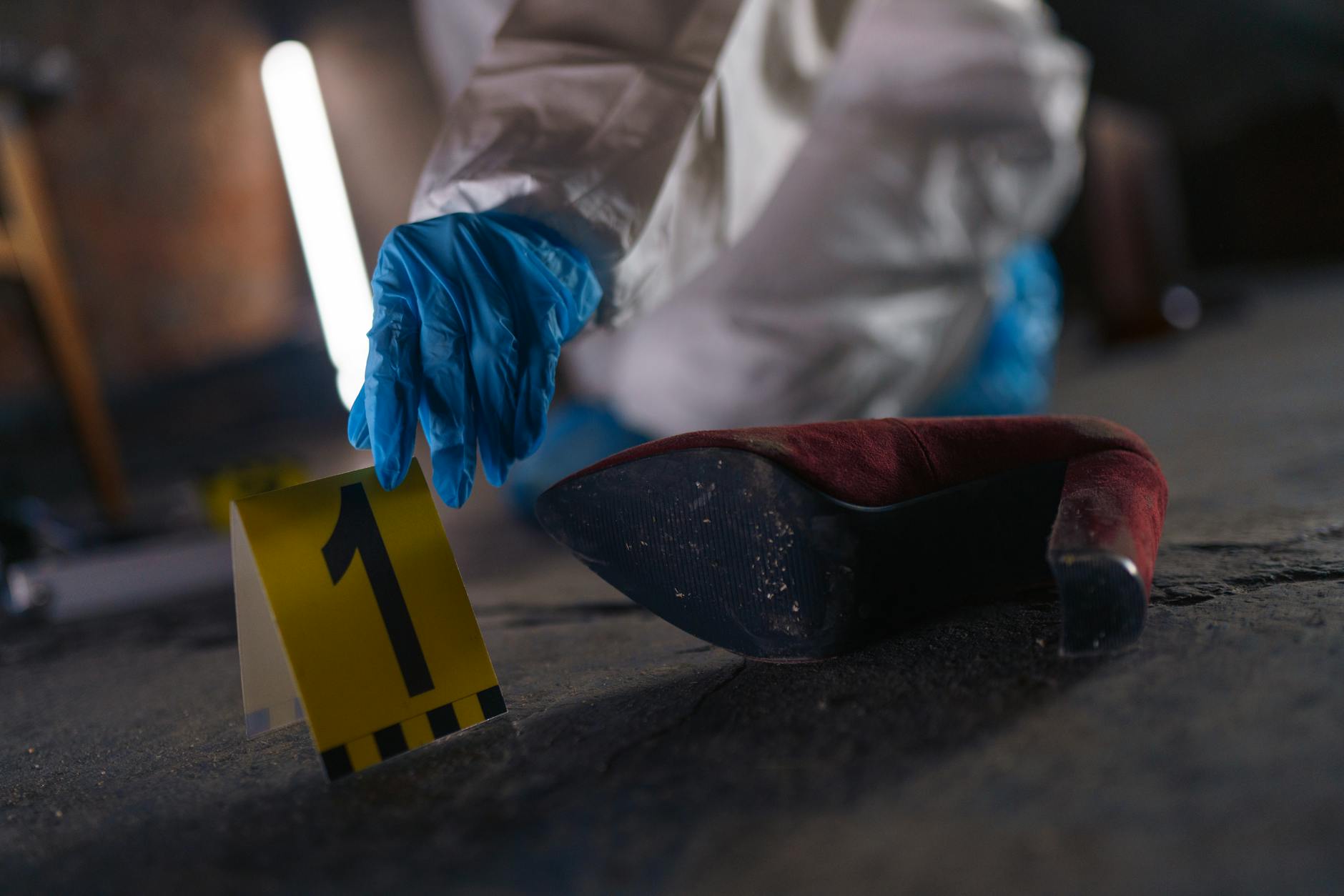
A no-body murder case is one of the most difficult prosecutions in the criminal law system. The Crown must prove, beyond reasonable doubt, that the victim is dead and that the accused caused that death, all without a body to anchor the evidence. Australian courts have convicted defendants in these circumstances, but the evidentiary hurdles are steep on both sides of the courtroom.
What makes a no-body case different from a conventional murder charge
In a conventional murder prosecution, a body provides the foundation for everything: cause of death, time of death, signs of injury, forensic trace. Remove the body and the prosecution must reconstruct each of those elements from circumstantial evidence alone.
That reconstruction typically draws on a combination of the following:
- Evidence that the victim has not been seen, contacted family, accessed their bank account, or used their phone since a specific date
- Statements or conduct by the accused that are inconsistent with the victim being alive
- Forensic material such as blood, DNA, or human tissue recovered from a scene or vehicle
- Evidence of motive, prior threats, or a deteriorating relationship between accused and victim
None of these strands alone is sufficient. The prosecution needs them to interlock. Courts assess whether, taken together, the evidence excludes every reasonable hypothesis other than that the accused killed the victim.
How the prosecution proves death itself
Proving that a person is dead without their remains is a distinct challenge from proving who killed them. Juries are entitled to infer death from prolonged and unexplained absence, but the inference carries more weight when the victim had strong ties to family, work, and community that they suddenly severed for no apparent reason.
Prosecutors focus on what courts sometimes call "absence evidence": no bank withdrawals, no Medicare or Centrelink activity, no contact with children or close relatives, no passport use, no social media presence. The longer the unexplained absence and the more out of character it is, the stronger the inference that the person is not voluntarily hiding.
Expert testimony from a forensic accountant, a telecommunications analyst, or a behavioural scientist can support the inference. In some cases, the accused's own statements have provided the clearest evidence: claims about where the victim went, plans they supposedly announced, or reasons they supposedly left, which are then contradicted by every verifiable fact in the record.
The role of circumstantial evidence and the Farquharson direction
No-body prosecutions are almost always built entirely on circumstantial evidence. Where that is so, the trial judge will typically give the jury a direction on how to reason from circumstances to a verdict of guilt. The Farquharson direction is the standard vehicle for that guidance in New South Wales and other Australian jurisdictions.
The direction tells jurors that a guilty verdict is only available if the circumstances, considered as a whole, are consistent with guilt and inconsistent with any other reasonable explanation. In a no-body case, the defence will work hard to establish alternative hypotheses: the victim chose to disappear, relocated without telling anyone, or is alive but estranged. Each plausible alternative weakens the Crown's case without requiring the defence to prove it.
What the defence can do
The defence does not carry the burden of proving the victim is alive. It only needs to create a genuine doubt. That said, effective no-body defence work is active rather than passive.
Competent defence counsel will press the Crown on every step of its inferential chain. If the victim had a history of disappearing from family, that matters. If there is no forensic evidence linking the accused to any violence, that matters. If the victim had independent reasons to leave, financial, legal, or personal, those reasons need to be put before the jury.
The accused's right to silence is also directly relevant. Ann Valos Criminal Law advises clients in serious matters that a decision about whether to give evidence is one of the most consequential choices in any trial. In a no-body case, an accused who gives evidence opens the door to cross-examination on every inconsistency between their account and the objective facts. An accused who stays silent forces the jury to evaluate the Crown case on its own terms.
Notable Australian no-body convictions
Australian courts have convicted defendants of murder without recovered remains on more than one occasion. The 2004 conviction of Gordon Wyatt in South Australia for the murder of his wife Vicki Cleary, and the 2008 conviction of Lloyd Rayney in Western Australia (later overturned on other grounds) illustrate how courts approach these matters differently. More recently, the conviction of Chris Dawson in New South Wales in 2022 for the 1982 murder of his wife Lynette Dawson stands as the most prominent modern example. Lynette's body has never been found. The verdict followed more than four decades of investigation and rested almost entirely on witness accounts, records of the accused's conduct, and the complete absence of any credible explanation for Lynette's disappearance.
The Dawson case is also notable because it was conducted as a judge-alone trial, with Justice Ian Harrison delivering detailed written reasons. That format allowed a rigorous public accounting of exactly how the Crown's circumstantial case satisfied the beyond reasonable doubt standard without physical remains.
Sentencing in no-body cases
Conviction in a no-body murder case carries the same maximum penalty as any other murder conviction. In New South Wales, that is life imprisonment, with a standard non-parole period of 25 years for a category-one murder. The absence of a body does not reduce the seriousness of the offence in principle, but sentencing judges may treat the failure to disclose the location of remains as an additional factor in assessing the offender's moral culpability and the ongoing harm to the victim's family.
Some Australian jurisdictions have moved to create specific sentencing provisions that treat non-disclosure of remains as an aggravating feature. The practical effect is that a convicted offender who declines to reveal where the body is hidden may face a longer effective sentence than one who cooperates.
Why legal representation in these cases demands specialist skill
No-body murder cases are not routine criminal matters. They require a defence lawyer who understands how to identify and exploit the weak links in a long inferential chain, how to manage a client's decision about giving evidence, and how to address a jury on the difference between a strong suspicion and proof beyond reasonable doubt.
Ann Valos Criminal Law is a team of accredited criminal law specialists with over 30 years of combined experience in serious criminal matters. Clients facing charges of this complexity need lawyers who have spent years working in the District and Supreme Courts and who understand the procedural and evidentiary tools available to the defence.
If you or someone you know is facing a serious criminal charge, contact Ann Valos Criminal Law for advice specific to your situation.